Development program for movement opportunity providers
Intention
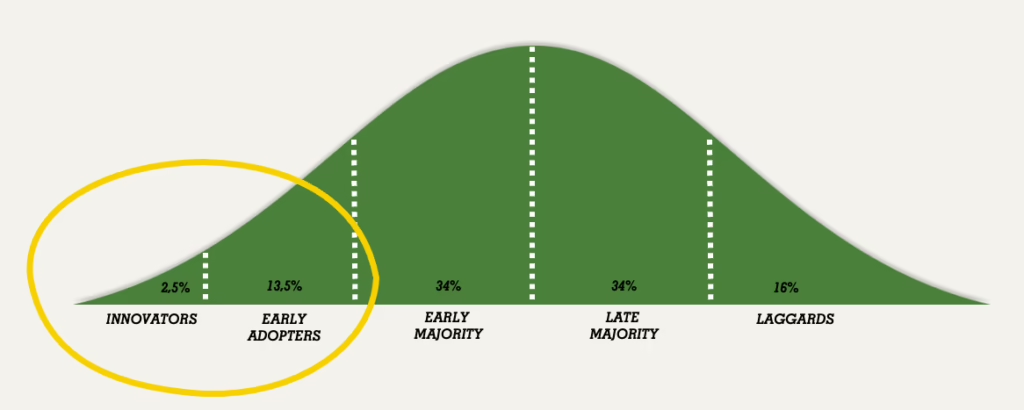
The development program is designed based on a proven and research-based theory of change, which means that people are differently open and receptive to adopting new ideas, products and ways of working. The critical mass in each population is rational and practically oriented. They would rather see someone else make successful changes before they themselves take on, in this case, a new way of creating qualitative movement experiences.
The purpose of the program is to support forward-thinking and innovative movement enablers. in validating, developing and advocating the meaning of qualitative movement experiences in their context. They create lessons and success stories that inspire more and that ultimately contribute to “tipping the system”.
Target group
The development program is designed for leaders who in various ways have the task and responsibility of creating conditions for physical activity. We call them “movement opportunity providers”. They have begun to explore the meaning of qualitative movement experiences in their context and want support in validating, developing, and advocating the relevance and benefits of the concept to colleagues and other key system support actors. The program is suitable for actors in all sectors.
Layout
The development program is designed based on the theory of how innovations spread (Diffusion of innovations. Rogers, 1962). The theory explains how new ideas are adopted at different speeds by different groups in a population, and provides guidance for efficient resource use and value-based issues.
The development program begins with a call where leaders from selected sectors are offered the opportunity to apply for a place in the program. The call can either be broad (for leaders from different types of contexts, organizations and levels) or targeted at leaders within a specific type of activity. The people sought are early users (early adopters) of physical literacy whose personal values and work tasks are compatible with the vision of a future society rich in movement.
The program consists of joint meetings for all participants, individual work meetings with Change the games trainers, own development work and communicative efforts to spread the new solutions.
We recommend that the development program be carried out over approximately 20-40 weeks with at least three joint course meetings. For participants, participation in the program involves an estimated 1-2 hours of work per week.
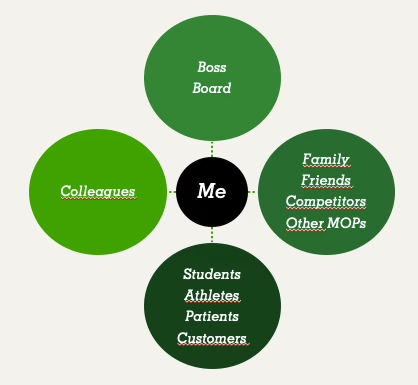
A five dimensional view of leadrship is used to develop the participants ability to engage their stakeholders and to help them create a plan of influence and change within their organization and environment.
“Leadership over others is preceded by leadership over oneself”.
Content
The journey of the participants through the development program is fundamentally based on the questions that the adoption factors provide:
– Complexity – How do you explain to stakeholders in your context what qualitative movement experiences are?
– Compatibility – How do qualitative movement experiences fit with your personal and your organization’s values, tasks and responsibilities?
– Relative advantage – What benefits could you get from validating, developing and advocating qualitative movement experiences, compared to something else?
– Testability – Develop and/or evaluate a qualitative movement activity or environment in your organization.
– Measurability – The leader’s ability to create qualitative movement experiences and the participants’ exchange.
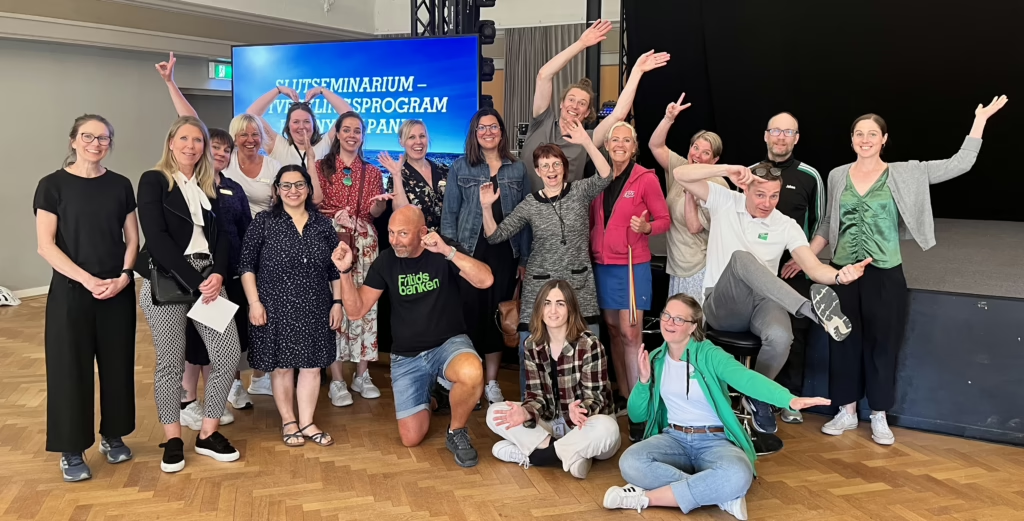
The participants in the program in city of Sundsvall, with educators in preschool and primary school 2024.
Implemented programs
Umeå/Västerbotten, with participants from several sectors 2020 >
Umeå/Västerbotten, with participant from several sectors 2021 >
Umeå, with educators in preschool 2023 >
Sundsvall, with educators in preschool and primary school 2024 >
Västerbotten, with educators in primary school 2024-25 >
For more information – welcome to contact us >

